Ceallachán Caisil
Ceallachán mac
Buadacháin 42nd Christian King of Munster 934-954
(Father of all the Callaghans)
Ceallachán Caisil is the revered 10th
Century King of Munster (SW Ireland) whom most people bearing the surname
Callaghan (and all its variations) claim descendance from. He ruled Munster for
some 10 to 18 years amid contending warring Irish factions and invading
Vikings. According to one leading researcher, Professor Alexander Bugge, he was called "Ceallachán of Cashel" because
he conquered the town of Cashel, in Tipperary (along with many others!), from
the Vikings (Bugge 1905). There is some consensus that before the end of
the second century, Ceallachán's ancestors (the Eoganachts)
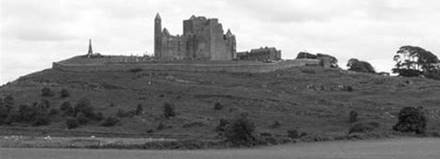
had moved from County Kerry eastwards, settling near the Rock of Cashel (Co
Tipperary). In part this view is supported by several popular old legends from Munster. While reliable
records of the period are sparse it is known that during the 4th
Century, Cannall Corc established his royal fortress
on the great limestone rock and for 800 years, this became home to the Eoganachts of Caisil (ie Ceallachán Caisil's sect).
Regarding his
physical appearance, there is only scanty information available. For example in the "Caitreim Cellachán Caisil" saga, Ceallachán was described
as having curly fair hair (Bugge 1905). Elsewhere in the saga the wife of the
Viking ruler of Dublin (Lady Mor - see further down) is supposed to have said of Ceallachán:
I fell in love with your red face
In Port Lairge (Waterford)
on the battlefield,
With your valour as you charged through the
battalions,
With your size among the Munstermen."
(Bugge 1905)
 Although we
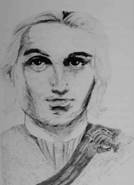
don't have any reliable image showing his appearance, clearly his looks and
stature were such as to attract female attention. Also, as noted by Professor
Alexander Bugge, from the descriptions of Ceallachán at the Battle of Limerick, he was likely to
be a large, strong man (Bugge 1905).
Although we
don't have any reliable image showing his appearance, clearly his looks and
stature were such as to attract female attention. Also, as noted by Professor
Alexander Bugge, from the descriptions of Ceallachán at the Battle of Limerick, he was likely to
be a large, strong man (Bugge 1905).
Concerning his
deeds, there is so much to report that would fill a book, so this brief page
cannot aspire to do justice in attempting to tell the story of Ceallachán Caisil's
life. Instead we will leave it to the those of you with a thirst for more
information to follow up on the many references (books, annals, sagas etc)
presented at the end of this short article, many of which provide detailed, academically well-research account of
Ceallachán Caisil's life and deeds, as best these things can be done when a
1000 years has passed! Instead, this article will list only his battles main
with the Vikings (referred to as the "Lochlannachs";
Norwegians but also including Danes) described in the 'Saga of Ceallachán' (probably written in the early 1100s). According to
the saga, after Ceallachán's inauguration, battles with the "Lochlannachs" were fought at Limerick, Cork, Cashel,
and Port Lairge (Waterford). Ceallachán proved to
be a formidable opponent, successfully driving back the Vikings and, as a
result, Sitric, King of the principal Viking stronghold, Ath
Cliath (Dublin), deployed deception (offering his sister in marriage) to
capture Ceallachán. A series of battles ensued resulting in Ceallachán's release and
Sitric's death by drowning during a sea battle in
Dundalk harbour (North of Dublin). Supposedly, when his Munster clan and ships
sailed in to rescue him, Ceallachán had been "bound to the mast" by the
Vikings who were intending to sail east and kill him.
Given all
these battles and close calls with death an obvious question is, how did Cellachán eventually die? Perhaps
you will not be surprised to learn that there has been much debate over his
manner of death. One account describes him being struck by lightning during a
thunderstorm which has a certain air of believability since it is fairly obvious risk anyone wearing metal armour. Other accounts are more
bland (and preferable from a personal perspective!), for example "... Ceallachán of Cashel,
the son of Buadachan, died a laudable death at Cashel Anno Domini 952"
(Bugge 1905). There is a general consensus (balancing
the various views) that Ceallachán died about 954 AD.
Finally,
before this brief description ends, it would be useful to reflect on a couple of contentious areas.
First, correct or standard spelling is a relatively recent idea (for example,
(the first dictionary wasn’t published until 1604!). Thus, down the years,
numerous variations of Ceallachán have emerged (both in their English and Irish
forms). This article has simply adhered to the spelling convention utilised in Professor
Alexander Bugge's work. It needs to be emphasised that the spellings used
in this article is not intended to imply any particular
spelling is correct or, in some way, to be more important (we are all
part of the same family, whatever twists and turns, language has introduced to
our names down the years!). Second, when dealing with accounts that
stretch so far backs in time it's unavoidable that myth and fact get somewhat
intertwined. For example, in earlier days, some writers claimed more imaginative linkages
going back some 90+ generations, reaching notable historic characters such as
King Milesius of Brigia and Corunna in North West
Spain, the Pharaohs during the time of Moses (the origin of the sword and
serpent in the Callaghan arms) and even touching on the story of Adam and Eve.
While more modern research has dispensed with these ambitious connections in
favour of focusing on a more provable history, its omission from this article
is not intended to argue for a particular position, rather that is left to the better informed scholars of this topic to pronounce on.
Thus, this piece is intended to be simply a short, fairly
superficial taster of Ceallachán Caisil story
that aims to motivate an interest to learn more, by reading the more scholarly
accounts listed at the end of this article. For those interested in ancestry,
it may be useful to know that some members of the Callaghan descendants can
trace their lineage back to Donogh mac Ceallachán, King of Munster 961-963 (ie the son of Ceallachán Caisil), over 1000 years ago (not
many families can do that!). In 1994, the Dublin Genealogical Office (in 1994)
supported Don Juan O'Callaghan of Tortosa, Spain, in his claim to be the
closest modern male descendant of Ceallachán Caisil!
Some References:
This is not intended to be an exhaustive list of references, rather
it's a simple starting point for those with an interest in discovering more
about the life and times of Ceallachán Caisil and his descendants.
The references provided give fascinating accounts of Ceallachán Caisil and the broader
Ceallachán diaspora, together with references to the
original Sagas, Annals that some of you may enjoy researching. Whatever brought you to this page, hoping you will have found the
information both interesting and useful.
·
Sean Mac Airt (1951),
"The Annals of Inisfallen",
The Dublin Institute for Advanced Studies
·
Alexander Bugge (1905),
"Caithreim Ceallachain Caisil: The Victorious Career of Cellachan
of Cashel or the Wars Between the Irishmen and the Norsemen in the Middle of
the 10th Century", Translation and Notes by Alexander Bugge, J. Chr. Gundersens bogtrykkeri:
Christiania., Oslo: Det Norske Historiske Kildeskriftfond
·
John Francis Byrne(1973),
"Irish Kings and High-Kings",
London: Batsford, ISBN 0-7134-5882-8
·
Joseph F.O Callaghan,
"Clan Callaghan: The
O Callaghan Family of County Cork", 302 pages, publisher
Genealogical.Com, Inc, published 23 Nov 2020 (revised edition), ISBN:
9780806359168, 2020 (revised) - A
well-researched book that traces the O'Callaghans
(and variants of the name) from their beginnings in Munster Ireland through the
upheavals of history which have seen their progeny scattered around the world.
·
Kevin L Callahan "The First Callaghan: Ceallachán of Cashel",
online book/thesis, http://ceallachan.users.50megs.com/callahan.html
(accessed 11 August 2009)
·
Chris Callaghan,
"Book Of The
Callaghan: Ceallachain Caisil,
King Of Munster 934-954", A Heritage Book, ISBN Number:
978-0-9565354-2-9 Printed i Ireland by SPRINT-print Ltd, 2013
·
John O'Donovan (editor)
(1887), "Annals of Ulster"
·
Donnchadh O Corrain 1974, "Caithreim Chellachain Chaisil;
History or Propaganda?" Eriu vol. XXV.
Dublin: Royal Irish Academy, pp. 1-69.
·
John O'Donovan (editor)
(1841). "The Circuit of Ireland by Muicheartach Mac Neill, Prince of Aileach;
a poem written in the year DCCCCXLII. by Cormacan Eigas, Chief Poet of the North of Ireland".
published in Tracts Relating to Ireland 1841, Vol. I, printed for the Irish
Archaeological Society, Dublin.
·
Ruth Dudley Edwards
(1973), "An Atlas of Irish History"
2nd ed. Methuen: London and New York.
·
Peter and Fiona Somerset Fry
(1988), "A History of Ireland",
Routledge: London and New York
·
J. Goedheer (1938), "Irish and Norse Traditions about the Battle
of Clontarf". Haarlem: H.D. Tjeenk Willink
& Zoon N. V.
·
Benjamin T. Hudson,
(2004), "Cellachán mac Buadacháin (d. 954)", Oxford
Dictionary of National Biography, Oxford: Oxford University Press.
·
Geoffrey Keating (1913),
"History of Ireland, vol XV, and
Volume III", Published for the Irish Texts Society by David Nutt.
57-58 Long Acre
·
Denis Murphy (1896)
"Annals of Clonmacnoise, from the
creation to AD 1408" (extra volume of the Royal Society of Antiquaries
of Ireland for 1893-95. Translated into English A.D. 1627 by Conell
Mageoghagan), Dublin: University Press.
·
J. Ryan, 1941, "The historical content of Caithreim Ceallachain Chaisil" in Journal of the Royal Society of
Antiquaries of Ireland. pp. 89-100.
·
Francis John Byrne,
(1973), "Irish Kings and High-Kings",
St. Martin's Press: New York.
·
James Henthorn Todd (1867)
(editor & translator), "Cogadh Gaedhel re Gallaibh: The War of
the Gaedhil with the Gaill
or the invasions of Ireland by the Danes and other Norsemen",
Longmans, Green, Reader, and Dyer.
·
Wikipedia, "Description of Ceallachán Caisil"
- https://en.wikipedia.org/wiki/Cellach%C3%A1n_Caisil (last accessed July 2021)
Return to main kttp://www.callaghan.info
page
Last Undated: 5 June
2026 & 18 July 2021